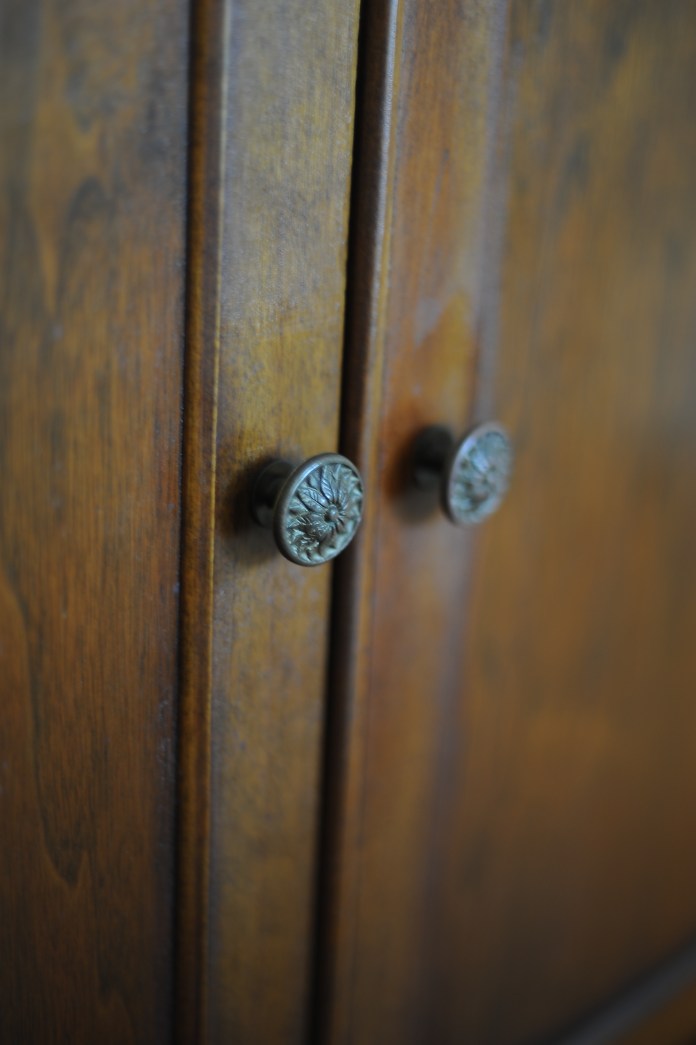
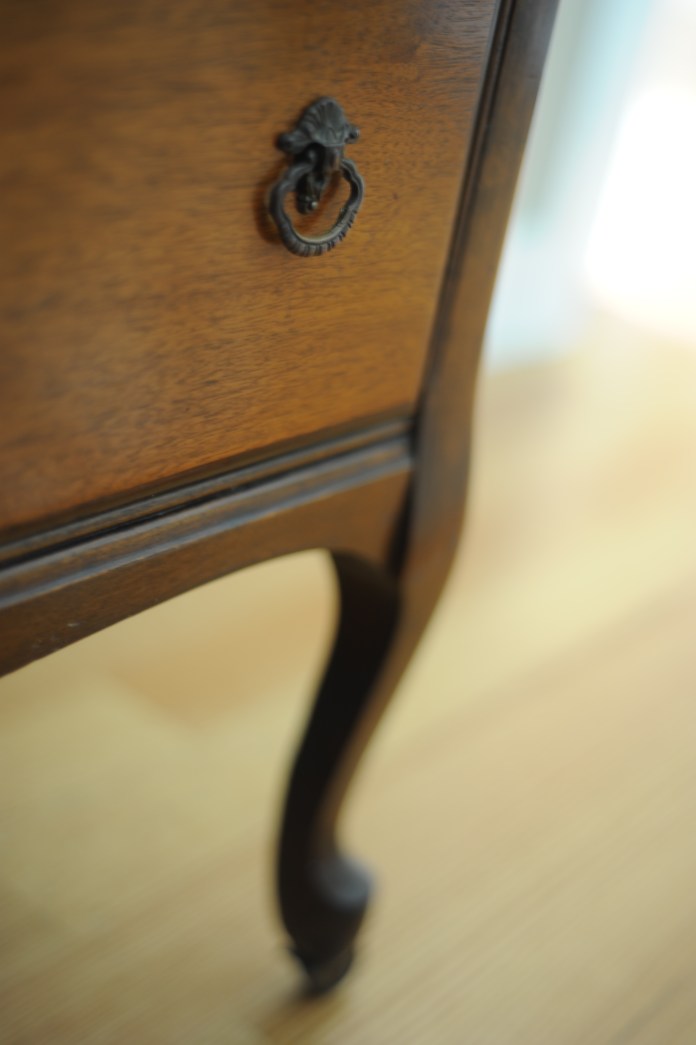
As a child, my room was furnished with my great grandmother’s furniture: specifically a diminutive vanity and chest of drawers. This set is now in my parents’ guest room.
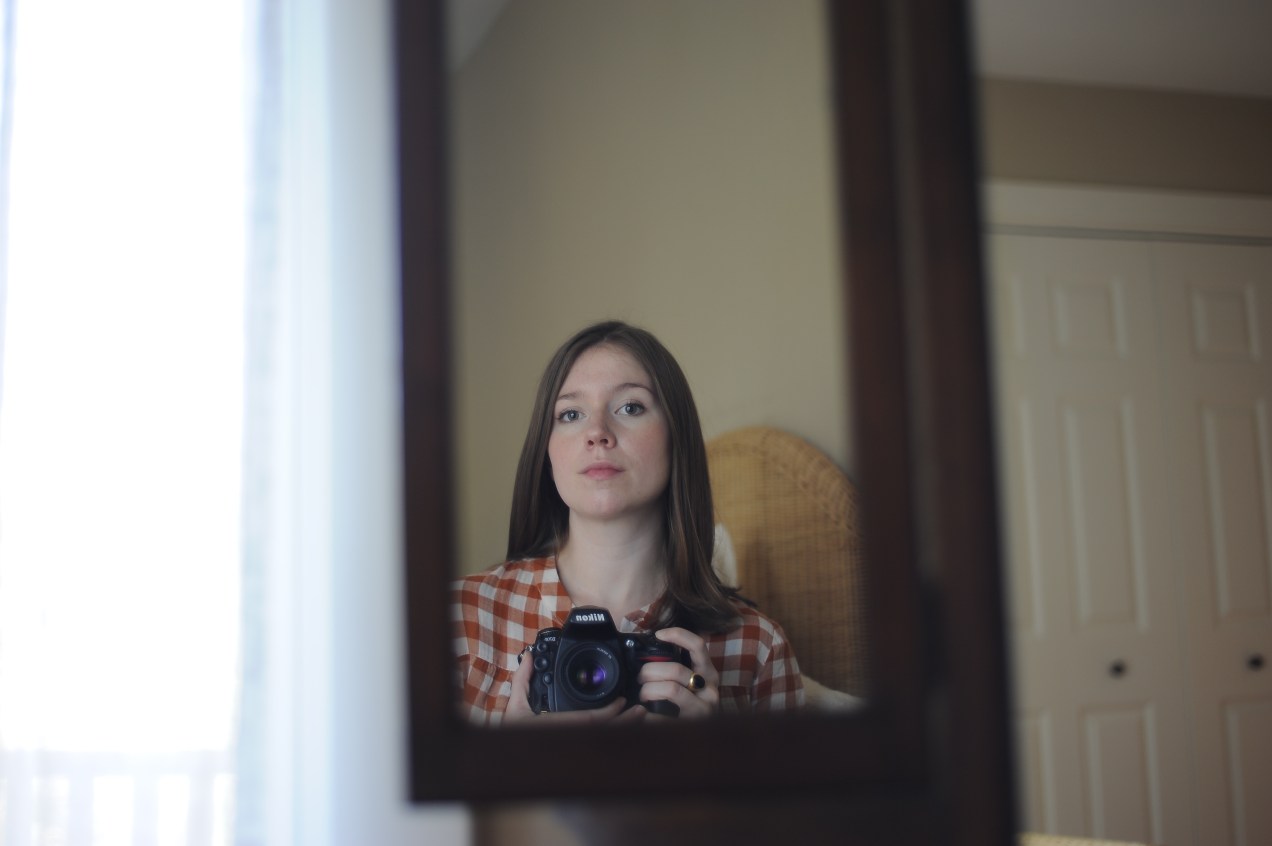
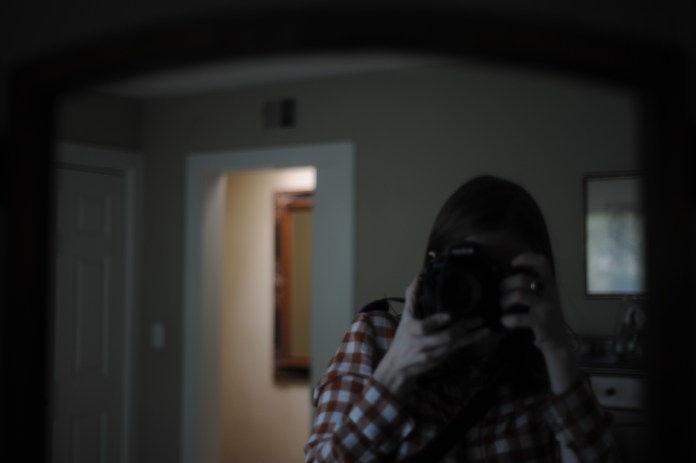
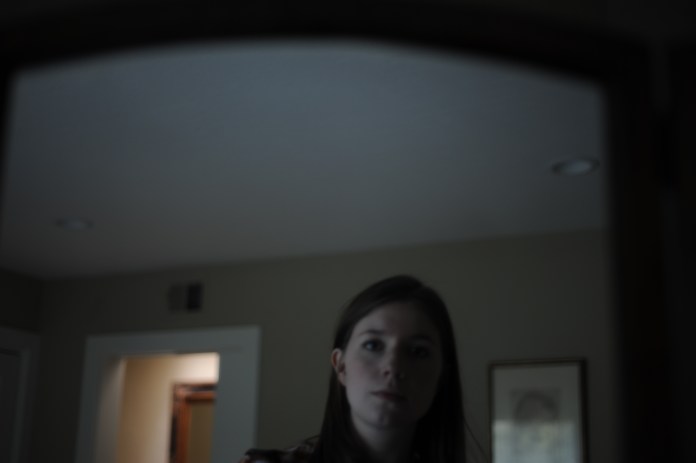
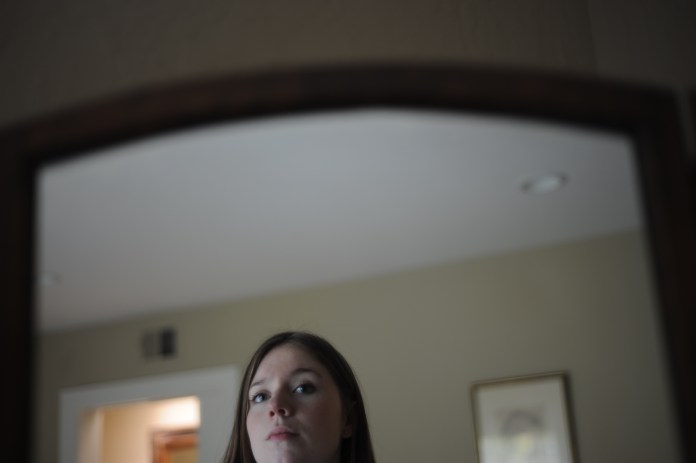
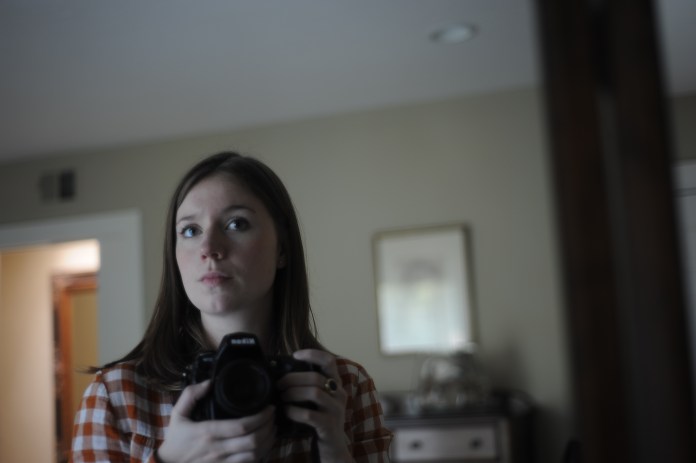
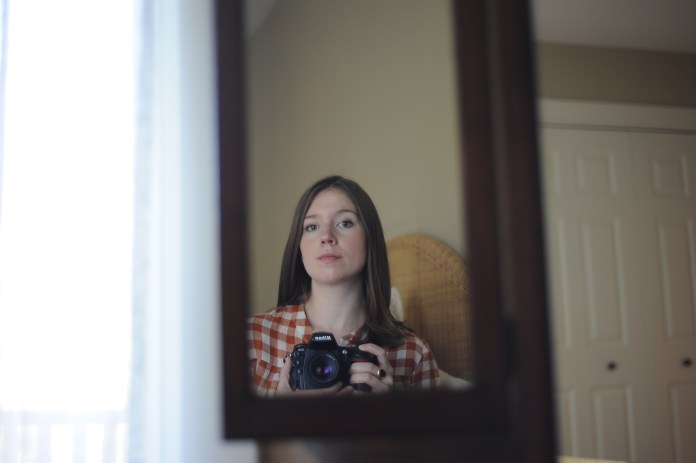
During my last visit to my parents’ house, I was folding laundry in the guest room and noticed my reflection. How many hours had I spent observing myself in this same mirror? How many hours had my great grandmother?
Selfies make me uncomfortable. It was hard to lower the camera to attempt a self-portrait, but I wanted to capture this moment of reflection.
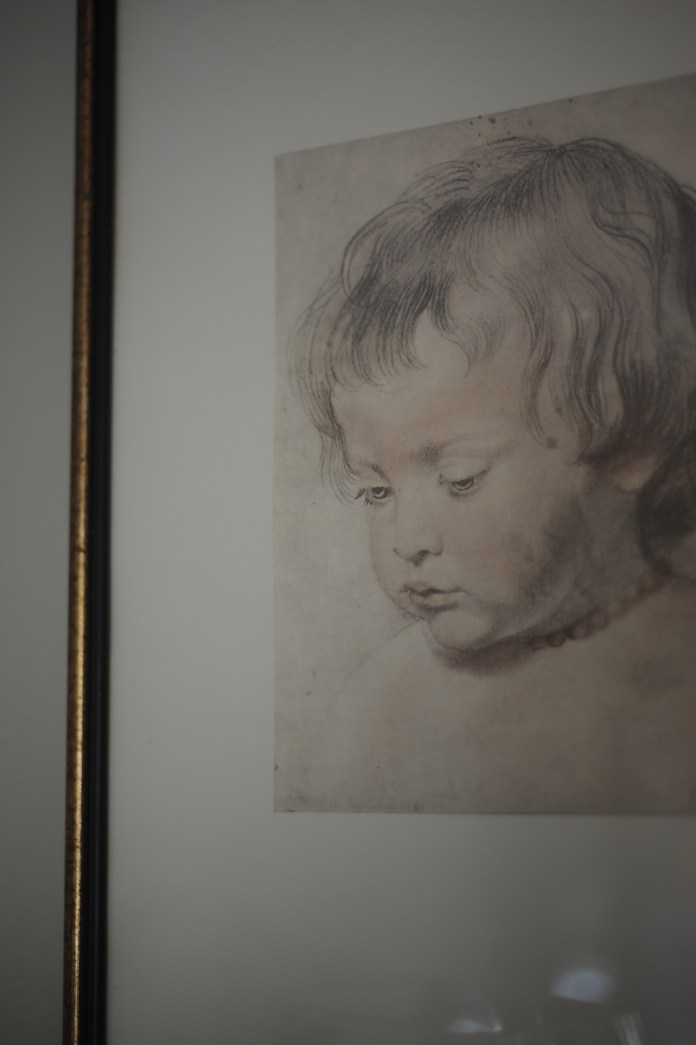
In so many ways I still feel like a child, like the baby girl in the picture hanging behind me.
This chest of drawers has lived more life than I have.
Collecting objects, scars and memories.
I just make believe I’m older by posing in the mirror.
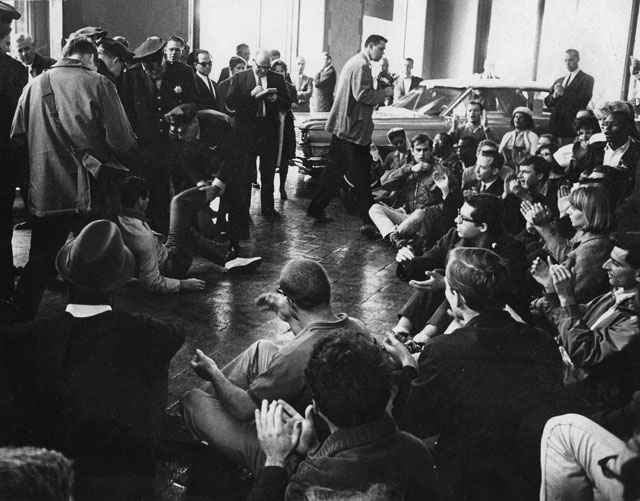
“Look at this guy wearing white bucks! He’s got white bucks on and the cops are dragging him away by the leg” exclaims Stephen Ehret, chuckling to himself as he clicks on a photograph of a 1964 San Francisco sit-in. “That’s a great picture. We need to get that up on the website,” Ehret observes.
Jeffrey Blankfort, whose photograph we have been discussing, turns to me and says, “See? This is what happens; there are too many photographs to choose from.”
1964 sit-in at a Cadillac dealer in San Francisco; Photo by Jeffrey Blankfort
We’re sitting in Ehret’s Sausalito art studio among large-scale paintings of California landscapes. Ehret uploads scanned images to his friend’s online portfolio, which went live for the first time this year in honor of Blankfort’s 80th birthday.
As Ehret clicks, Blankfort regales me with stories of his photographic adventures, “You’ve got to tell me when to stop, I could go on forever,” Blankfort laughs.
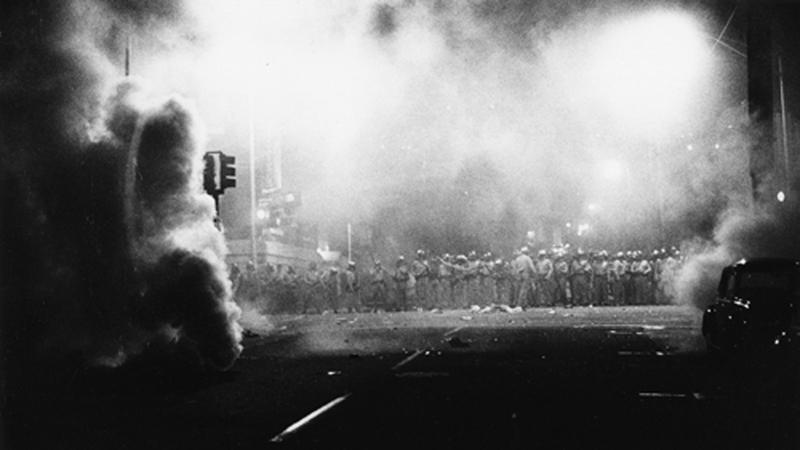
In the early 1960s, “before anybody had long hair,” Blankfort got his start as a photojournalist by documenting San Francisco sit-ins. These NAACP demonstrations, like the one the buck-clad protester attended at the former Cadillac Agency on Van Ness, were a part of a critical effort to end racist hiring practices in the city, not only at car dealerships but also at hotels and restaurants.
“There are kids that go to school in the city and don’t know anything about the sit-ins. It’s a crime,” says Blankfort. This outrage drives Blankfort to share his photographs with the next generation to fill in the gaps in what he calls “sanitized history.”
Since the beginning of his career, Blankfort’s photographs have been shown in galleries and published in periodicals, books and retrospectives around the world. After getting his teaching credential later in life, Blankfort discovered his photographs could take on new significance in the classroom.
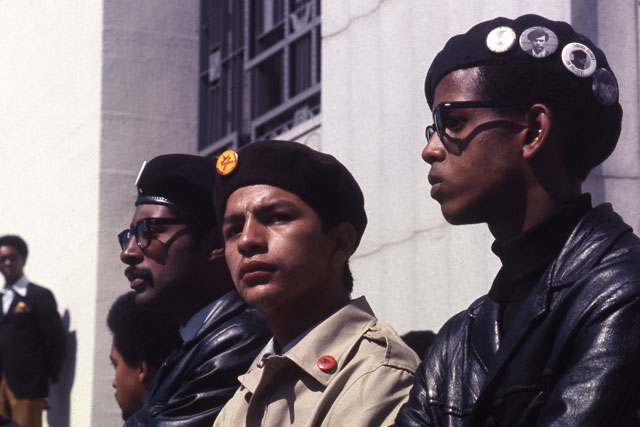
Brown Berets and Black Panthers in Oakland, 1968; Photo by Jeffrey Blankfort
Blankfort says, “The black students did not want to hear about Martin Luther King, but when I talked to them about the Black Panthers, some of them had family in the Panthers, and suddenly they wanted to listen. And the attitude of the class changed so much when I would bring my photographs in. They didn’t relate to the South, they related to what went on in the Bay Area.”


 adrienneblaine.com